
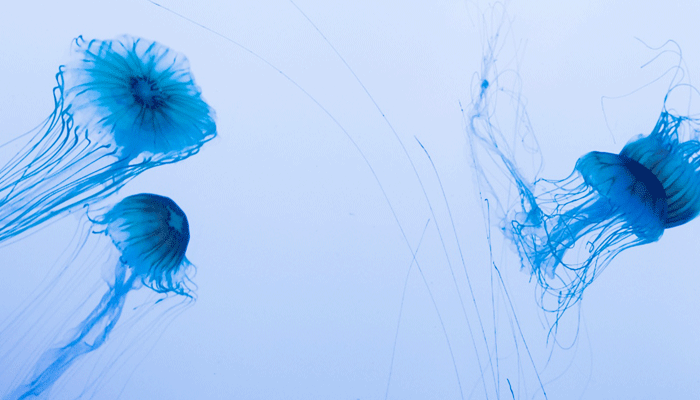
Hemolytic venoms from marine cnidarian jellyfish – an overview
Review Article

J Venom Res (2014), Vol 5, 22-32
Published online: 23 July 2014
Full Text (PDF ~240kb) | (PubMed Central Record HTML) (PubMed) (References)
Gian Luigi Mariottini
Department of Earth, Environment and Life Sciences, University of Genova, I-16132 Genova, Italy
*Correspondence to: Gian Luigi Mariottini, Email: Gian.Luigi.Mariottini@unige.it, Tel: +39103538070,Fax: +39103538072
Received: 31 March 2014; Revised: 15 July 2014; Accepted: 23 July 2014
© Copyright The Author(s). First Published by Library Publishing Media. This is an open access article, published under the terms of the Creative Commons Attribution Non-Commercial License (http://creativecommons.org/licenses/by-nc/3.0). This license permits non-commercial use, distribution and reproduction of the article, provided the original work is appropriately acknowledged with correct citation details.
ABSTRACT
Cnidarian jellyfish are viewed as an emergent problem in several coastal zones throughout the world. Recurrent outbreaks pose a serious threat to tourists and bathers, as well as to sea-workers, involving health and economical aspects. As a rule, cnidarian stinging as a consequence of nematocyst firing induces merely local symptoms but cardiovascular or neurological complications can also occur. Hemolysis is a frequent effect of cnidarian stinging; this dangerous condition is known to be caused by several venoms and can sometimes be lethal. At present, the bulk of data concerning hemolytic cnidarian venoms comes from the study of benthic species, such as sea anemones and soft corals, but hemolytic factors were found in venoms of several siphonophore, cubozoan and scyphozoan jellyfish, which are mainly involved in the envenomation of bathers and sea-workers. Therefore, the aim of this paper is to review the scientific literature concerning the hemolytic venoms from cnidarian jellyfish taking into consideration their importance in human pathology as well as health implications and possible therapeutic measures.
KEYWORDS: Cnidaria, jellyfish, venoms, hemolysis, plankton